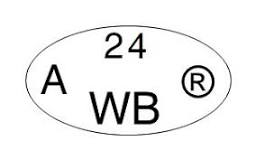
Just as the registration plate on a car can give away its age, so second hand bowls reveal their age. They have a datestamp so you can tell when they were made and how old they are. Comparing the datestamp on second hand bowls with the condition gives you an indication of where (indoors, outdoors or both) and how intensively they have been used.
2nd Hand Taylor Legacy SL 00H Black
Where is the datestamp on my bowls?
The datestamp is inside an oval on the front face of each bowl. It consists of two numbers indicating the expiry date (also known as the re-testing date) of the set. In the sample above, the number 24 means that the expiry date is 31 December 2024. The expiry date is ten year after the year the bowl is manufactured.
What does expiry date mean?
This is the last date this set can be used in a competition where a nationally qualified umpire is officiating. After this date, although the bowls can be used in friendly matches, they have to be re-tested and stamped with a new expiry date.
Why should bowls expire?
Because after ten years of play and being knocked about, hitting each other and the end wall of the rink, each bowl in the set may run differently (narrower or wider than its fellows in the set). When a set of bowls is manufactured, and again when they are re-tested, each bowl in a set of four is rolled down a test ramp on a long L-shaped surface covered with billiard-table felt. Each bowl must come to rest on exactly the same spot, about the size of a 50p piece.
If a bowl doesn’t run correctly, skilled craftsmen can use a lathe to finely adjust the bias of the rogue bowl until it runs exactly the same as the others in the set.
Where were they made or most recently tested?
The code letter on the left-hand side of the stamp reveals the manufacturer. If a set has more than one stamp, then the letter may refer to the location where it was last tested.
| Code Letter | Manufacturer / Tester | Period |
|---|---|---|
| A | Thomas Taylor (Bowls) Ltd | Current |
| C | George Mackay | Current |
| G | The Bowls Doctor (Barry Cox) | Current |
| N | Henselite (Australia) Pty Ltd | Current |
| P | Pershore Bowls Centre | Current |
| Q | Sydney Bowls Centre | Current |
| S | Bowling Arm & Bowls Test Centre, Bendigo | Current |
| U | Bayeumas Bowls Test Centre | Current |
| V | Greenmaster Bowls Testing (NSW) | Current |
| X | Drakes Pride | Current |
| Z | Aero Bowls Pty Ltd (Walrod Pty Ltd) | Current |
| B | Thurston & Co Ltd / Bowls Direct (NZ) | Pre-2002 |
| D | Grays of Cambridge Ltd | Pre-2002 |
| E | Pyne Associates Ltd | Pre-2002 |
| F | Douglas Kenn (Sports) Ltd | Pre-2002 |
| G | Thomas Padmore Ltd | Pre-2002 |
| H | J Jaques & Son Ltd | Pre-2002 |
| J | CBBS Co Ltd | Pre-2002 |
| K | Henselite (UK) Ltd | Pre-2002 |
| L | Taylor Bowls Australia | Pre-2002 |
| M | Metrolite Industries | Pre-2002 |
| R | Fred Fern’s Bowls Centre Pty Ltd | Pre-2002 (until 2014) |
| T | T. E. S. Halliwell Bowls Co | Pre-2002 |
| Y | Riley Leisure Ltd (Greenmaster) | Pre-2002 |
The pursuit of excellence in lawn bowls often leads enthusiasts to consider their equipment. While new sets offer pristine condition and the latest innovations, they come with a significant price tag. This guide unveils the often-overlooked world of used bowls, offering a smart, budget-friendly option for players of all levels.
Investing in second-hand bowls can be a game-changer, providing access to quality equipment without breaking the bank. Whether you’re a beginner testing the waters or an experienced player seeking a specific model, the pre-owned market holds immense potential. Join us as we explore how to navigate this market, ensuring you make an informed and valuable purchase.
Opting for second-hand bowls presents a compelling array of benefits that extend beyond mere cost savings. The most immediate advantage is financial: pre-owned bowls can be acquired at a fraction of the price of new sets, making the sport more accessible for newcomers and allowing seasoned players to experiment with different models or biases.
Beyond economics, choosing used bowls is a sustainable decision. It promotes a circular economy by extending the life of existing bowling equipment and reducing the demand for new manufacturing. This eco-conscious approach aligns with broader efforts to minimize waste and environmental impact. Furthermore, the used bowls market can sometimes yield unique finds, such as discontinued models with sought-after characteristics or vintage sets that carry a distinct charm, offering a sense of individuality on the green.
Making a smart purchase when buying used bowls requires careful consideration of several critical factors. The overall condition of the bowls is paramount; look for any visible signs of damage, such as cracks, deep gouges, or significant chips that could affect their performance or longevity. Surface scratches are often unavoidable with pre-owned bowls, but ensure they are superficial and don’t compromise the bowl’s integrity.
Always check the ‘world stamp’ or ‘date stamp’ on each bowl, which indicates its year of manufacture and legality for competitive play. Regulations typically allow bowls up to a certain age in official competitions, so understanding this can save you from an unsuitable purchase. Assessing the wear on the running surface is also crucial, as excessive abrasion can alter the bowl’s bias and trajectory.
There are now just four manufacturers of lawn bowls: Henselite, Taylor, Aero, and Drakes Pride Each offers a range of models, each designed with different biases, weights, and grip patterns. For instance, a Henselite Classic II might offer a narrower draw, ideal for faster greens, while a Drakes Pride XP has a more forgiving, wider line.
Before you buy, try different models from your club shed, or from other club members to find out whether you prefer a narrower or a wider line to the jack. Note too that green conditions can affect the line a bowl takes and how far it will travel. Websites, bowls clubs forums, and experienced players can provide invaluable insights into the nuances of various bowling equipment. Understanding the subtle differences between a ‘medium’ and a ‘heavy’ bias, or the impact of a ‘zig-zag’ versus a ‘dimple’ grip, will empower you to select used bowls that genuinely enhance your game.
The perfect set of bowls feels like an extension of your hand, and achieving this fit is crucial for consistent performance. Bowl size is primarily determined by your hand size and strength; a bowl that is too large or too small can lead to an uncomfortable grip and an inconsistent delivery. It’s often recommended to hold various sizes before committing, ensuring a natural and secure feel in your hand.
Grip patterns also play a significant role in control and comfort. Options range from smooth, plain surfaces to various dimpled, ringed, or concaved designs. Some players prefer the tactile feedback of a heavily dimpled grip, especially in wet conditions, while others favor a smoother surface. Consider your personal preference and how the grip affects your release and overall control on the green when evaluating second-hand bowls.
We stock a good selection of quality used bowls. Of course you can also find them online but caution is required: buying a set by a picture alone doesn’t give you a true indication of the condition, and sometimes bowls are advertised by fraudsters!
Local bowls clubs and associations are excellent resources, as members frequently upgrade their equipment and sell their old sets. Many clubs have notice boards or internal communication channels for these sales, offering an opportunity to try before you buy and get advice from experienced players.
A smart purchase goes beyond finding the right bowls; it involves careful negotiation, thorough inspection, and verification. Before making an offer, research the market value of similar used bowls by the same brand and model to ensure the asking price is fair. Online completed listings and current sale prices can provide a good benchmark. Don’t be afraid to politely negotiate, especially if you identify minor cosmetic imperfections.
When inspecting the bowls, look closely for any hairline cracks, especially around the running surface or grip area. Feel for any noticeable flat spots or uneven wear that might indicate a compromised bias. If possible, ask to see the bowls rolled on a flat surface to observe their run-out and ensure they aren’t ‘wobbling.’ Finally, verify the seller’s reputation, especially for online purchases; clear communication, additional photos, and a willingness to meet in person (if local) can significantly reduce risks associated with buying used bowls.
Embarking on the journey to purchase used bowls is a strategic move that offers significant benefits for any bowler. From the substantial financial savings that make the sport more accessible to beginners, to the environmental advantages of choosing sustainable bowling equipment, the value of second-hand bowls is undeniable. You can find quality, performance-ready sets that perfectly match your needs without the premium price tag associated with new models.
Remember that a successful purchase hinges on informed decision-making. Dedicate time to understanding different models and brands, scrutinizing the physical condition of each bowl, and ensuring the size and grip align with your unique playing style. Leverage the diverse marketplaces available, from online platforms to local bowls clubs, to find your ideal set. Armed with knowledge about inspection, pricing, and verification, you can navigate the market confidently and secure a fantastic deal.
Don’t let the cost of new bowling equipment deter you from enjoying or excelling in this wonderful sport. By exploring the vibrant market for used bowls, you open up a world of possibilities for upgrading your game economically and sustainably. Take these insights, apply them to your search, and get ready to roll your way to success on the green with your perfectly chosen, pre-owned bowls!
Q: How can I tell the age of used bowls?
A: Most modern bowling equipment has a “world stamp” or “date stamp” imprinted on it, typically showing the year of manufacture (e.g., ’24’ for 2024). This stamp indicates the bowls’ legality for competitive play, which is usually valid for a certain number of years from the manufacturing date.
Q: What are the most important things to inspect on second-hand bowls?
A: Key inspection points include checking for any cracks, deep chips, or significant gouges that affect the bowl’s structural integrity. Also, look for excessive wear on the running surface, ensure the grip pattern isn’t overly smoothed, and verify the clarity and recency of the world stamp for competitive use.
Q: Is it safe to buy used bowls online?
A: Buying used bowls online can be safe if you exercise caution. Always opt for sellers with good ratings, request clear, high-resolution photos from multiple angles, and don’t hesitate to ask detailed questions about the bowls’ condition and history. Meeting in person for local sales allows for physical inspection, which is highly recommended.
Q: Can I customize pre-owned bowls?
A: Yes, you can often customize pre-owned bowls. Common customizations include adding a new grip to a plain set, changing the color of the rings (if permitted by regulations), or having them re-polished by a professional. Some players also opt to have their initials engraved, adding a personal touch to their second-hand bowls.
Q: How much cheaper are used bowls compared to new ones?
A: The price difference for used bowls can be substantial, often ranging from 30% to 70% off the retail price of new sets. The actual discount depends on the bowls’ condition, age, brand popularity, and demand. Even lightly pre-owned bowls can offer significant savings, making them a very budget-friendly option.